If you've been living with chronic pain — a stubborn shoulder, an aching knee, a heel that screams at you every morning — you've probably tried the usual playbook. Rest. Ice. Stretching. Maybe pain medication that dulls the symptoms for a few hours, then wears off.
And somewhere along the way, you may have heard the term StemWave therapy and wondered: What is that, exactly? And could it actually help me?
As a chiropractor who has practiced in Bowie, Maryland for well over a decade, I've seen a lot of technologies come and go. StemWave is one of the few that made me stop and pay attention — because instead of masking pain, it's designed to help your body do what it was built to do: heal itself.
In this guide, I'll walk you through exactly what StemWave therapy is, how it works, what conditions it may help with, what a session feels like, and what it costs. By the end, you'll know whether it's worth exploring for your own pain.
What Is StemWave Therapy?
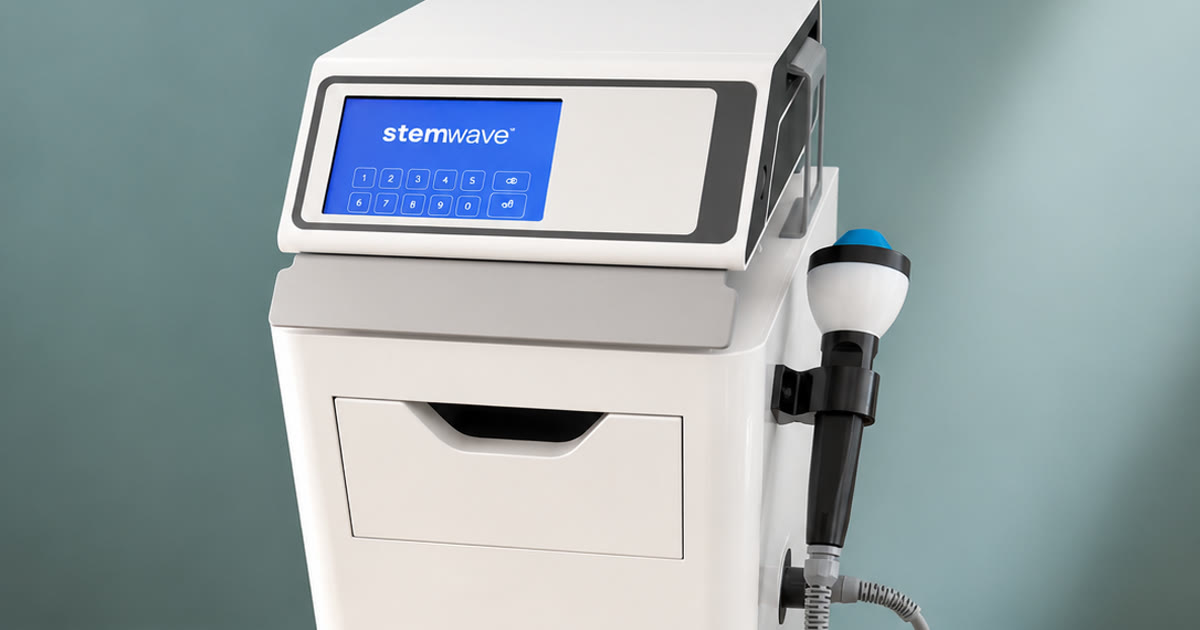
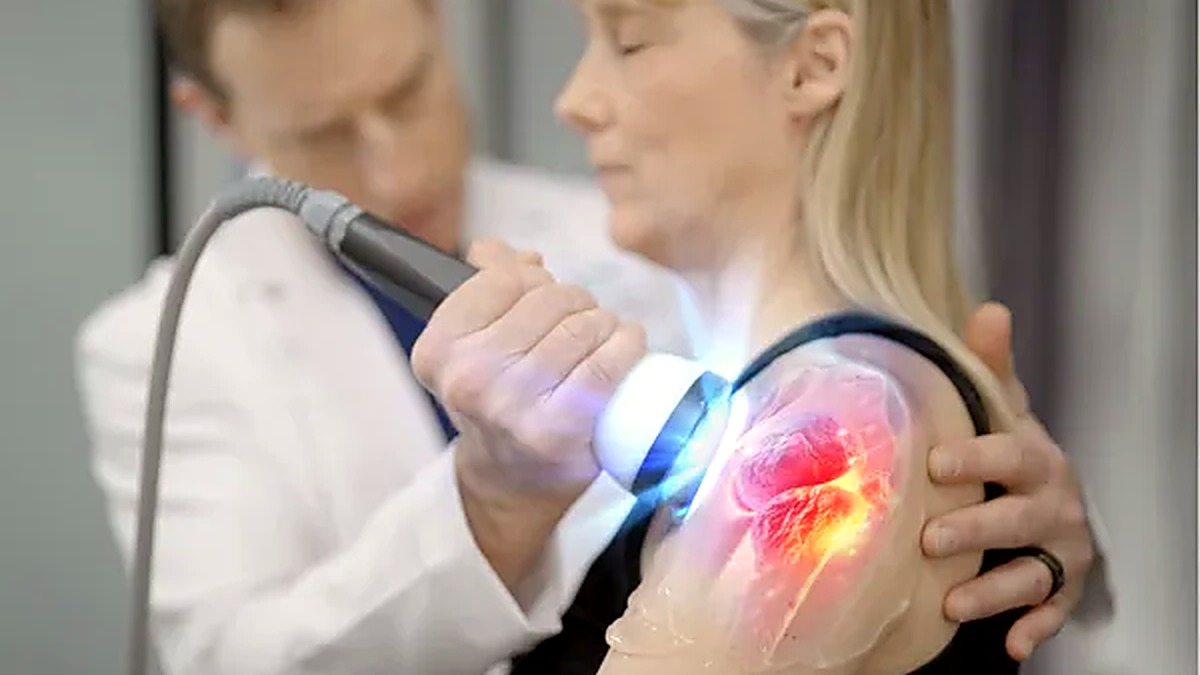
StemWave therapy is a form of acoustic wave therapy — sometimes called extracorporeal shockwave therapy — that uses focused sound waves to stimulate your body's natural healing response in areas of pain and injury.
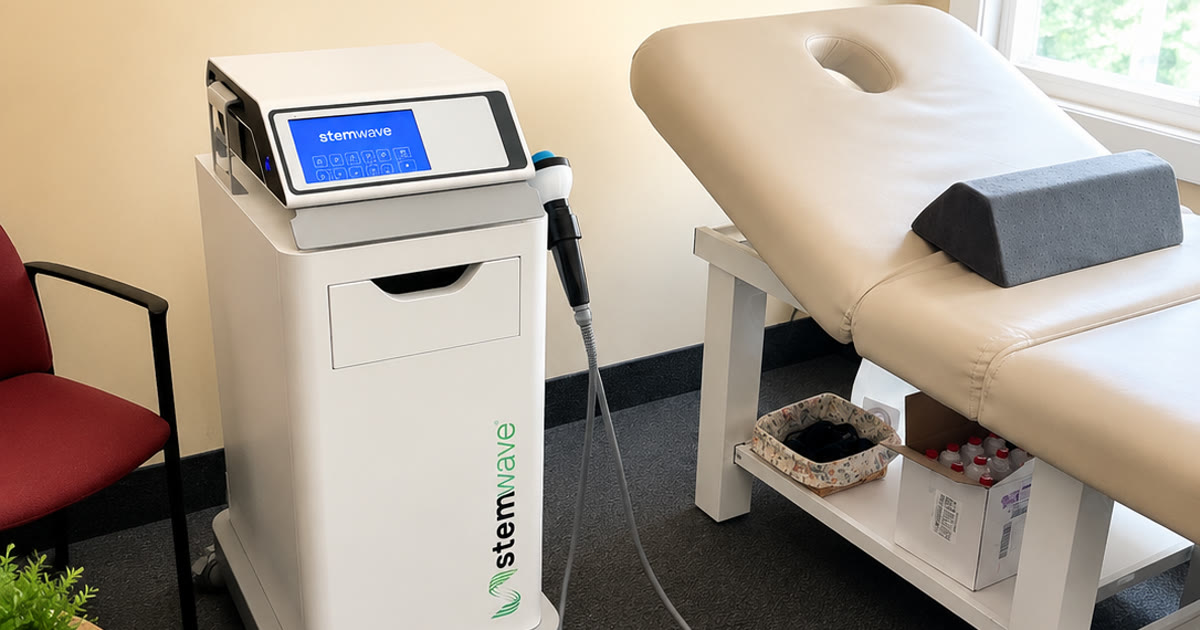
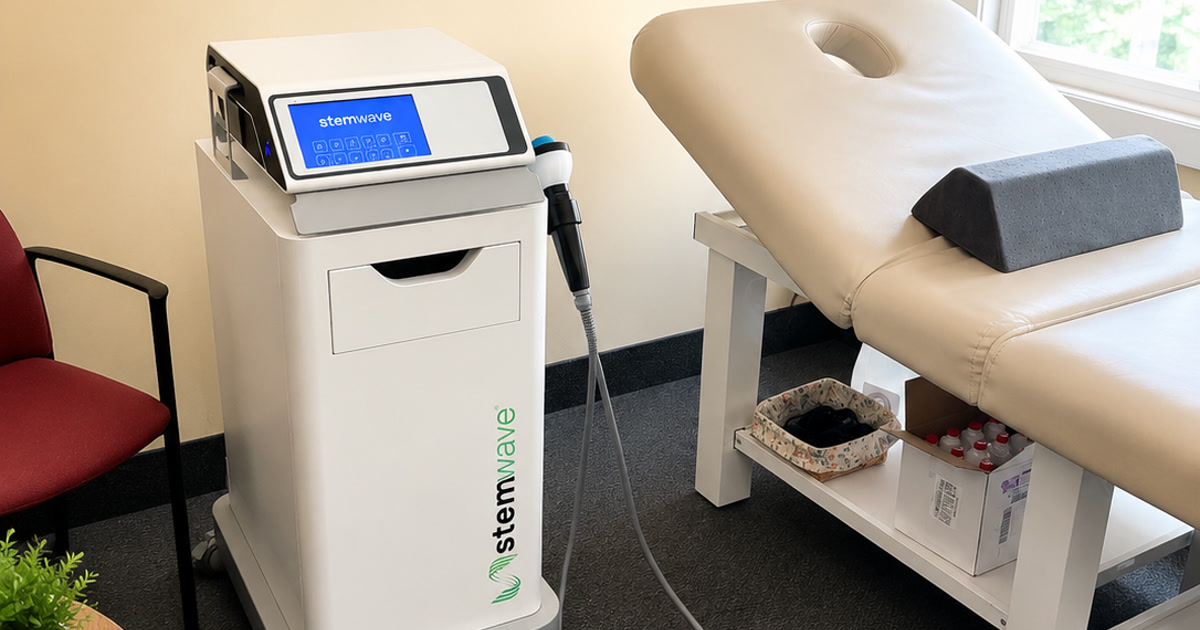
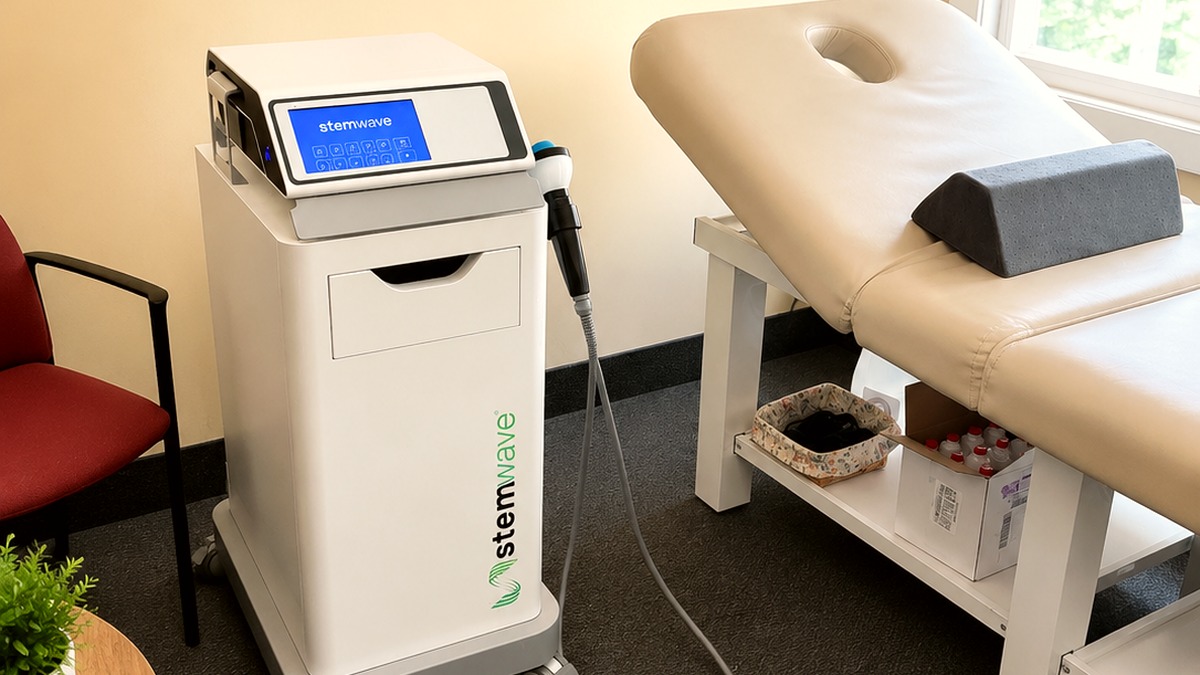
"Extracorporeal" simply means "outside the body." Nothing enters your skin. There are no needles, no incisions, and no medication involved. A handheld device is placed against the skin over the painful area, and it delivers gentle, targeted acoustic waves deep into the tissue below.
The technology itself isn't new. Acoustic wave therapy has been used in medicine since the 1980s, when doctors first used shockwaves to break up kidney stones without surgery. Researchers later discovered something interesting: tissue near the treatment area seemed to respond in unexpected ways, showing signs of increased circulation and cellular activity. That discovery launched decades of research into using acoustic waves for musculoskeletal conditions — the muscles, tendons, ligaments, and joints where most chronic pain lives.
StemWave is a modern, FDA-registered version of this technology that uses electrohydraulic acoustic waves — a broader, deeper wave pattern designed to reach tissue that older devices couldn't.
How Does StemWave Work?
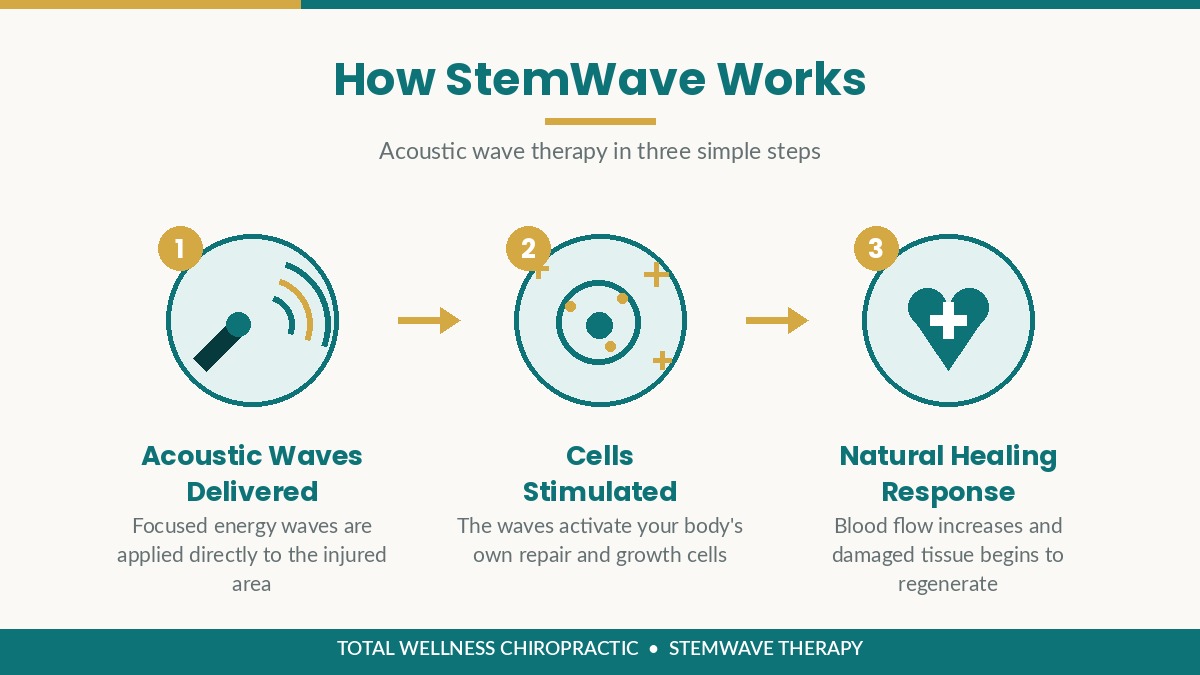
Here's the simple version: your body already knows how to heal. When you cut your finger, you don't have to think about it — your body sends blood, nutrients, and repair cells to the area, and the cut closes.
The problem with chronic pain is that the injured area often gets stuck. Old injuries, repetitive strain, and long-standing inflammation can leave tissue in a state where the normal healing process has stalled. Your body has essentially stopped paying attention to the area — it hurts, but it's not actively repairing.
StemWave is designed to get your body's attention again.
When the acoustic waves pass into the tissue, they create a controlled form of microstimulation. Your body interprets this as a signal that the area needs attention, which may support several natural responses:
- Increased blood flow. Acoustic waves are associated with the formation of new microscopic blood vessels (a process called angiogenesis), which may improve circulation to tissue that has been undernourished for years.
- Cellular repair signaling. The stimulation may encourage the release of growth factors and the recruitment of your body's own repair cells to the treatment area.
- Reduced inflammatory congestion. Improved circulation may help the body clear the byproducts of chronic inflammation that keep tissue irritated.
- Calmer pain signaling. Many patients report that treated areas simply feel less sensitive over time as the tissue environment improves.
An important note on language: StemWave therapy is not a cure, and no honest provider should tell you it will fix any condition. What it does is stimulate — it may support and accelerate your body's own healing response. Individual results vary, and that's exactly why we assess every patient before recommending it. Research on shockwave therapy for musculoskeletal conditions is ongoing, and reviews published in the National Library of Medicine have described it as a promising, well-tolerated option for a range of tendon and soft-tissue complaints.
What Conditions May StemWave Help With?
Because StemWave targets soft tissue and joints, it's used for a wide range of musculoskeletal complaints. At Total Wellness Chiropractic, the most common reasons patients come in for StemWave include:
- Chronic joint pain — knees, shoulders, hips, and elbows that ache daily
- Plantar fasciitis — that sharp heel pain with your first steps in the morning
- Shoulder pain — including rotator cuff irritation and general stiffness
- Knee pain — from wear-and-tear, old injuries, or overuse
- Tennis elbow and golfer's elbow — stubborn tendon pain at the elbow
- Back and neck discomfort — as a complement to chiropractic care
- Hip pain — including bursitis-type complaints
- Muscle and tendon injuries — strains that never quite resolved
- Scar tissue and old injuries — areas that have felt "stuck" for years
A pattern I see over and over: the patients who respond best are often the ones who have had the problem the longest. That sounds backwards, but it makes sense — these are exactly the areas where the body's healing response has stalled, and where a wake-up signal may make the biggest difference.
If you're not sure whether your condition is a fit, that's what the first visit is for. We'll evaluate the area — and if I don't think StemWave is right for you, I'll tell you and point you toward other options we offer.
What Is a StemWave Session Actually Like?
This is where StemWave surprises people. If the word "shockwave" makes you nervous, here's the reality:
A typical session takes about 20 minutes or less — with the actual treatment portion often just 5–10 minutes per area.
Here's the step-by-step:
- You sit or lie down comfortably. No gowns, no prep. Wear whatever lets us access the treatment area.
- We apply a gel to the skin. Just like an ultrasound, the gel helps the acoustic waves transfer into the tissue.
- The handheld device is moved over the area. You'll feel a rhythmic pulsing or tapping sensation. Over the exact spot of injury it can feel briefly tender — which is actually useful, because it helps us map precisely where the problem tissue is.
- We adjust intensity to your comfort. The treatment should never be more than mildly uncomfortable. You're in control the entire time.
- You get up and go about your day. No needles, no numbness, no downtime, no recovery period. Patients drive themselves home, go back to work, even go to the gym.
Most patients describe the sensation as strange but tolerable — a deep tapping. Many say the treated area feels looser or "warmer" immediately afterward, which is consistent with increased local circulation.
How Many Sessions Will I Need?
There's no one-size-fits-all answer, but here's the honest framework I give patients in my office:
| Situation | Typical Course | What to Expect |
|---|---|---|
| Mild, recent complaints | 3–5 sessions | Some patients notice a difference within the first 1–3 visits |
| Moderate, long-standing pain | 6–10 sessions | Gradual improvement building week over week |
| Chronic, complex, or multiple areas | 10–12+ sessions | Slower arc; progress is assessed and re-evaluated throughout |
Sessions are usually spaced 1–2 times per week, because the real work happens between visits — the treatment stimulates the healing response, and your body needs time to carry it out.
Two honest caveats:
- Feeling better early doesn't mean the tissue is done healing. Pain relief often comes before tissue repair is complete, which is why finishing a recommended course matters.
- If you're not responding, we'll tell you. We track your progress at every visit. StemWave is a tool, not a religion — if it's not moving the needle for you, we'll adjust the plan.
What Does StemWave Therapy Cost?
Let's talk about the part most clinics bury at the bottom of the page.
Regenerative and wave-based therapies at orthopedic and specialty clinics commonly run $150–$500 per session depending on your market, and courses of treatment can climb into the thousands. Because StemWave is typically considered an elective therapy, it's generally not covered by insurance — anywhere.
At Total Wellness, we've priced it so that trying it isn't a financial gamble:
Your first StemWave treatment at Total Wellness Chiropractic is just $50 — which includes an evaluation of the area, so you know before spending anything more whether you're a good candidate.
Compare that to the cost of ongoing pain medication, repeated cortisone injections, or surgery with weeks of recovery, and the value proposition is simple: for $50, you can feel what the therapy is like, get a professional assessment, and make an informed decision about whether to continue.
Is StemWave Safe? Who Shouldn't Do It?
StemWave therapy is FDA-registered, non-invasive, and generally very well tolerated. The most common side effects are mild and short-lived: temporary redness, mild soreness in the treated area (similar to a good workout), or minor tenderness for a day or so.
That said, acoustic wave therapy isn't for everyone. We typically do not treat:
- Areas near an active infection or open wound
- Patients who are pregnant (in the treatment region)
- Areas directly over a known malignancy
- Patients with certain bleeding disorders or on certain blood thinners (we'll review your medications first)
This is exactly why every StemWave patient at our office starts with an evaluation. Your health history matters, and a five-minute conversation up front prevents problems later. You can read more about the conditions we evaluate on our conditions page.
StemWave vs. the Alternatives
How does StemWave stack up against the other ways people manage chronic pain?
| Option | Invasive? | Downtime | Addresses the Tissue? |
|---|---|---|---|
| Pain medication | No | None | No — masks symptoms |
| Cortisone injection | Yes (needle) | Minimal | Reduces inflammation; repeated use has known drawbacks |
| Surgery | Yes | Weeks to months | Yes, structurally — with real recovery time and risk |
| StemWave therapy | No | None | Designed to stimulate your body's own repair response |
None of these are automatically wrong — there are absolutely times when injections or surgery are the right call, and I refer patients out when they are. But for many people with chronic musculoskeletal pain, it makes sense to try the least invasive option that targets the tissue itself before escalating to needles and scalpels.
Frequently Asked Questions
Does StemWave therapy hurt?
Most patients find it very tolerable — a deep, rhythmic tapping. Directly over injured tissue it can be briefly tender, and we adjust the intensity to your comfort at all times.
How quickly will I notice results?
Some patients notice a difference after the first few sessions; others build gradually over several weeks. Chronic, long-standing issues generally take longer than recent ones. Individual results vary.
Can I combine StemWave with chiropractic care?
Yes — and this is often where we see the best outcomes. Chiropractic adjustments address alignment and joint function, while StemWave targets the soft tissue itself. The two are complementary, and many of our treatment plans include both.
Is there really no downtime?
Really. You can drive, work, and exercise the same day. At most, plan for mild soreness like you'd feel after a solid workout.
Ready to Try StemWave?
If chronic pain has been running your life — dictating how you sleep, how you move, what activities you've given up — you owe it to yourself to find out whether your body's healing response just needs a wake-up call.
Book your $50 first treatment at Total Wellness Chiropractic. You'll get a real evaluation, your first StemWave session, and an honest answer about whether this therapy is a fit for you.
Call (301) 352-3454 or visit wherethehealingbegins.com/stemwave to schedule.
We're located at 6000 Laurel Bowie Road, Suite 202 in Bowie, Maryland — where pain stops and healing begins.
Dr. Eric Schmitt, D.C. is the Clinic Director of Total Wellness Chiropractic Center of Bowie and a multi-year winner of the Bowie Blade News Reader's Choice Award for Best Chiropractor. This article is for educational purposes and is not a substitute for individualized medical advice. StemWave therapy is designed to stimulate the body's natural healing response; it is not a cure for any disease or condition, and individual results vary.